The development of Artificial Intelligence (AI) is a new example of technological advancement impacting a wide array of industries across the global economy. Financial services, healthcare, entertainment, education, digital communications, and countless other sectors are incorporating the use of AI tools and technologies. The speed at which organizations are rushing to AI tool implementation has spurred an initial market for AI technologies which some have referred to as the “AI Wild West.” Rapid implementation of these tools has led to discussions of the use of open-source versus proprietary AI, particularly with the concerns around censorship, content moderation, and accessible information (or lack of it).
The lack of censorship over AI-generated content generally concerns three (3) issues. One is the political angle – the suppression of information politically, or the information that is provided by an AI. However, that, of course, is just one side of the question. The second side has to do with the nature of the content that may or may not be generated by the AI in question. Finally, the third piece has to do with the nature of the content that may or may not be generated by the AI in question. It is essential that these three pieces be understood, especially by the users of these tools, as there is a big difference between open-source and closed AI in this regard.
This article seeks to address the issues that are present in the context of open-source vs closed-source relative to the question of censorship, and why that exists, and the potential and/or probable compromises that exist with each.
The Definition of Open and Closed AI Models
What Is An Open AI Model?
Open AI Models are a kind of model that has publicly accessible source code as well as schematics of model architecture and other information relating to model training. This provides an opportunity for developers and researchers to analyze the information and then modify or fine-tune the model to deploy as a model of their choice.
They allow for:
- Decentralized deployment
- Customizable content filters and safety
- Modifiable and re-distributable licenses
- Community-based development
- Transparently Available Schematics and Source Code
What Is A Closed AI Model?
Closed AI Modeling is done by only a single private organization. Therefore the source code, training databases, safety systems, and other model-related internal documents are not publicly accessible as well. The organizations only allow people to run their model via an API or use the provided interface to interact with the model.
They allow for:
- Centralized control over the model’s behavior, functions, and updates
- Stringently enforced safety standards
- Lack of internal access
- Legal and commercial control
Most popular AI Applications that are used commercially are categorized here.
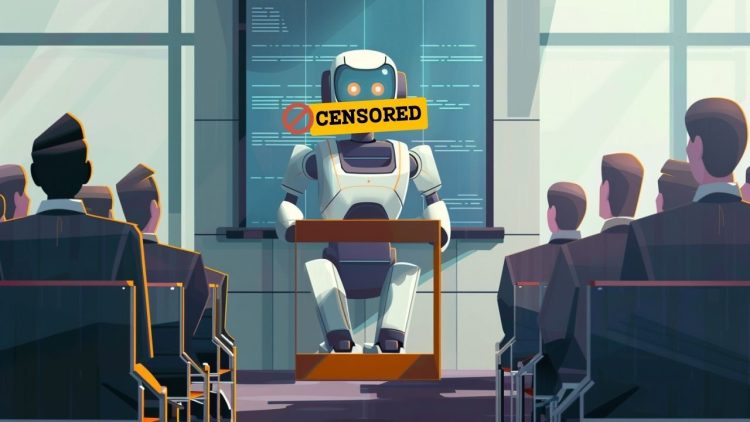
What Is Censorship In AI?
Here are some examples of the critical functions an AI-based model may lose due to censorship:
- Blocking misleading or illegal content
- Limiting misleading information or political manipulation
- The avoidance of discrimination and hate speech.
- The avoidance of hate speech or discrimination
- The avoidance of sexually explicit or violent hate speech
Censorship can operate on many levels, including filtering training data, moderation, reinforcement learning, runtime moderation, and user access control.
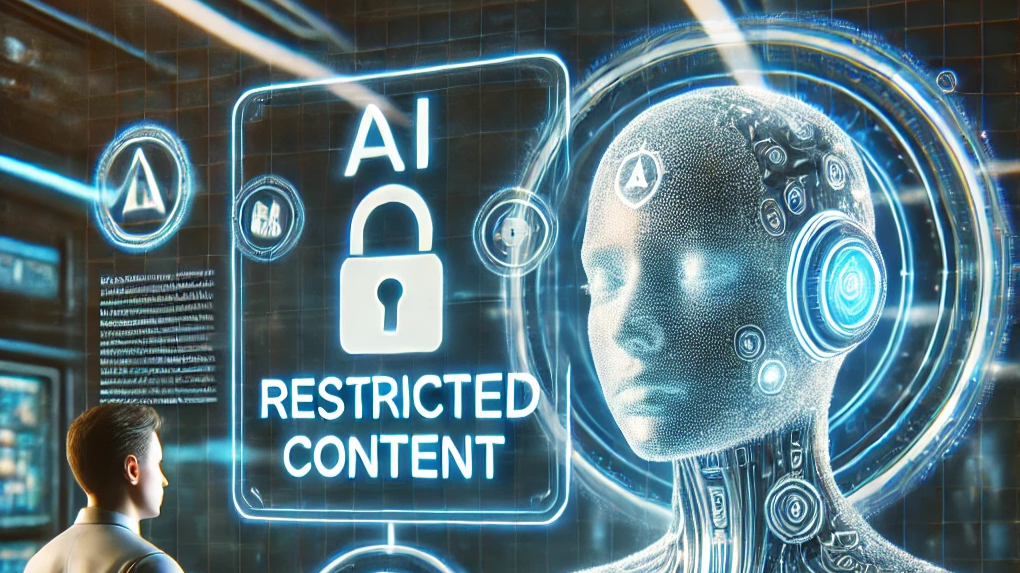
How Censorship Works in Open-Source AI Models
I. Variable Content Restrictions
Most open-source AI models have minimal or adjustable content filtering. While developers may put basic safety features in place, users can often change or remove them.
This enables:
- Organizations to research sensitive issues
- Developers to adjust moderation policies
- Organizations to modify AI systems’ behavior to fit regional customs and practices
However, this means that different users have different attitudes towards censorship.
II. Safety Mechanisms Provide Transparency
Open-source AI models provide an additional benefit: greater visibility into how and where censorship occurs. Adjustments can be made to:
- Logic that governs prompt filtering
- Rules that control response moderation
This visibility fosters rich community discussions around censorship to build or critique systems responsibly.
III. Decentralized Responsibility
In open-source systems, the responsibility for content moderation evolves from having a single point of control to the person or organization implementing the model.
To some extent, this protects against central forms of censorship while also providing avenues for exploitation.
Such outcomes include:
- The ability to express oneself freely
- The opportunity to take new approaches
- The chance to produce things that are damaging, problematic, or unethical
This is why censorship on open-source AIs is usually optional rather than default.
IV. Setting Censorship as a Design Choice
In many open-source models, censorship is designed as:
- User-selectable layers of safety
- Tools for third-party moderation
- Prompt filtering that can be switched on or off
As a result, the same model can be used in a varying range of ways based on the censorship controls that have been put in place.
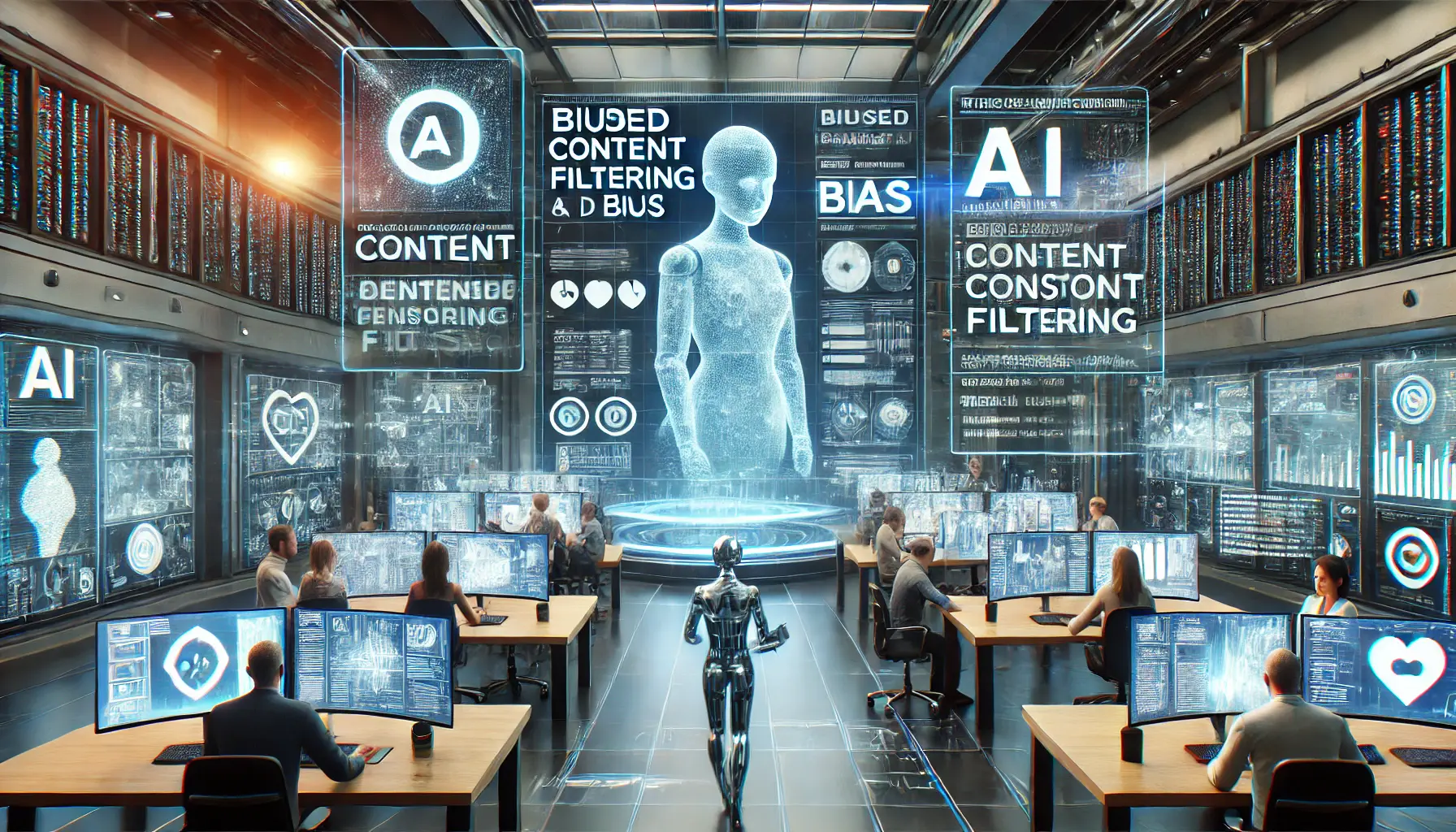
The Mechanics of Censorship in Proprietary AI Systems
I. Consolidated Control of Content
Proprietary AIs, with very few exceptions, have centrally maintained content policies that describe the dos of content produced.
This results in:
- Uniformity in behavior across the user base
- A blanket refusal to create the prohibited content
- The same level of moderation across the board
While providing greater levels of safety, it also results in fewer levels of flexibility.
II. Tampering with Training Datasets and Reinforcement
Proprietary models are typically trained on:
- Highly curbed content
- Negative incentives for low-quality or high-controversy output
This implies that censorship is a part of the very fabric of the model, beyond the things that are executed as outputs.
III. Legal and Commercial Pressures
Some of the most prominent closed AI providers are subject to:
- National and international regulations/laws
- Possible terms of service for the specific platform being utilized
- Corporate risk management strategies
In turn, this means that censorship can be more prevalent than other safety-related censorship (i.e. safety against violence, self-harm, etc). Censorship can also be more prevalent towards:
- Political bias (not taking any side/all sides on an issue)
- Protection of ideas
- Protection of company brand loyalty (i.e. brand masking)
From the user standpoint, this can lead to a feeling of excessive censorship.
IV. Limited Transparency
Using closed AI models means that users cannot see:
- Reasons for blocking (i.e. explaining the rationale)
- How rules are biased, moderated, and censorship is enforced.
This can display a lack of trust, especially when users feel that refusals are excessive.
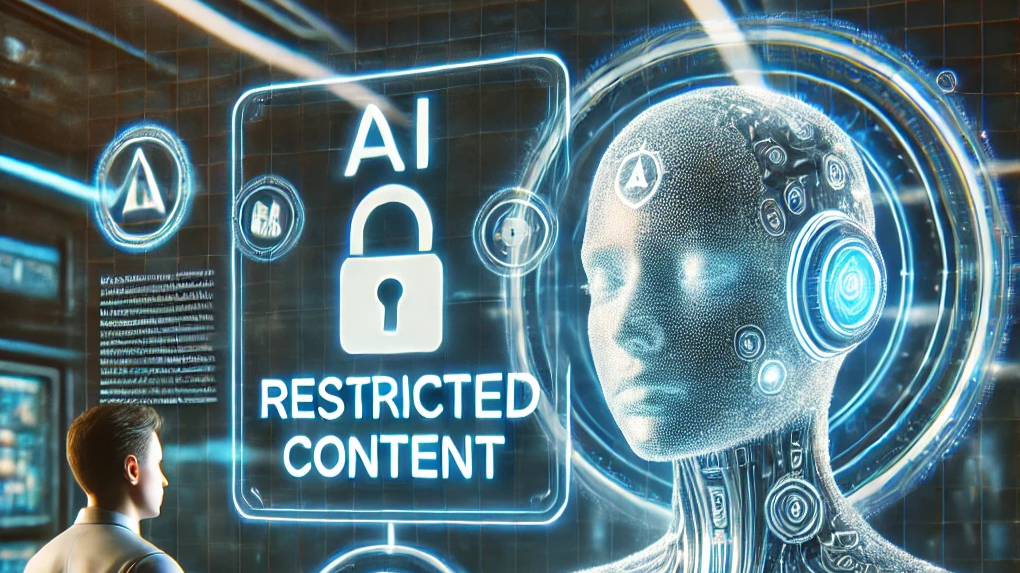
Print Freedom of Expression vs the Safety of Censorship AI
The most significant difference between open and closed AI models deals with how each addresses and balances user safety and freedom of expression.
Unlike many closed-source models, open models also allow greater freedom of expression. Because the code, as well as the safety (protection) frameworks are designed to be modified and customized, users can determine their own level of censorship. This ability to customize frameworks creates space for free expression of sensitive or controversial ideas, especially in academia, investigative journalism, or anywhere innovation and new ideas are being developed. This freedom and flexibility also hold the user of the open AI technology to a greater level of accountability.
Unlike AI models that are open source, those that are closed tend to focus more on safety, especially risk management. They implement strict policies to regulate what the models are allowed to generate based on user input. Closed models remain more suitable for public use because their restrictions lower the possibility of generating harmful content. Although, due to the safety-first approach, users may find the content generated to be censored or not cover enough of the important topics.
Customization vs Consistency in AI Behavior
The other main difference between open source and closed source models is the consistency level compared to the customization level. Models that are open-sourced can and will behave differently based on the developers who decided to implement the models, and how they decided to configure them. They can choose to change moderation policies, address friction, and censorship in tune with the use case or the culture. This level of flexibility grants extreme customization, but can create extreme variance for the end user.
On the other hand, closed AI models are a lot more consistent. Since there is centralized control of content policies, the AI will react in the same manner, regardless of the user, country, or system of implementation.
The limitations placed on content control can be frustrating, however, for businesses and organizations that appreciate consistency, reliability, and a standardized user experience, this type of consistency is necessary.
Potential for Abuse
Censorship and abuse potential are also highly influenced by whether an AI system is open source or closed.
Open-source models have more potential for abuse because no single authority enforces policies regarding the content. Also, there are a few restrictions when it comes to deploying these models. Because of this, an individual or organization can use these models for whatever they wish, and assume complete ethical responsibility when doing so.
The potential for abuse is reduced with closed AI models, for which there is a central authority. Model providers monitor and enforce content-related policies and provide guardrails for existing and emerging risks. Centralized control helps to reduce the risks of abuse and also cut short the advantage of decentralization.
User Control and Transparency
The control the user has in open-source and closed AI models is also different.
With open source AI, there is a high degree of user control. Users can evaluate and modify the logic behind the moderation, safety control, and censorship.
The ability to be agitated to be studied on the planes which are assumed to use censorship with controversy around their own ethical frameworks are likely to use the systems which are opaque with respect to the reasoning for the controls and the users must have little or no awareness of the processes which lead to the blocking of undesirable input. This offers a layer of control over the sensitive information and offers a streamlined information system but at the same time, it leads to frustrations and loss of information when it comes to system controls or data blocking.
Innovation and Research Impact
The evolution of interest and creativity continues to be funded through the use of unprotected or openly available data which can be used in varying degrees for multiple purposes. Through the unencumbered data in a systematic manner, it has promoted the growth of interest in further developments with a more profound understanding of AI.
The defunct and ineffective AI systems that have prohibitive structures are designed for large users with commercial systems and have to operate within the boundaries of manual compliance, and have to be designed within the risks for the users to protect them, and the systems that create inhibitors to protect the large population.
Ethical Trade-Offs in AI Censorship
The undoubted ethical consequences of the loss of control of AI have provided systems that offer no protection.
In closed systems, the decision to censor is made by third parties who, in addition to the legal and public risk, try to manage the company’s risk. This generates fears of centralized decision-making in the presence of possible unexplained gaps in the system.
In an open-source system, users are able to decide to censor, and such a system is, therefore, fully decentralized. Although this may be empowering, it raises questions of accountability, citizenship and social responsibility. The lack of a minimum set of standards makes it possible to define ethics in a way that can lead to very different and ultimately dangerous consequences.
Finding the Right Model for the Right Purpose
There is no universal way to determine which model of AI is better. Open-source is the way to go for research, private use, for a closed system, and where transparency and adaptability are a priority. On the contrary, closed AI models suit private and public sectors, and situations requiring security and compliance.
Understanding the various models enables users to direct their goals, values, and concerns to make an informed decision about the amount and type of censorship applicable.
Final Thought
The censorship of AI is more than about technology, it is about the value systems, the risk appetites, and the social ethics at play. Models of open AI prioritize transparency, freedom, and control for the user whereas closed AI models prioritize safety, accountability, and consistency.
The glaring issue with censorship in relation to AI content will change with the progression of AI. The search for the perfect AI will be to find the optimum level of effective censorship while the open-source transparency, and the closed model safety are in the right proportions.