Artificial intelligence has advanced rapidly in the past few years. One area in which there has been particularly notable growth is in image generation. Generators can create everything from simple artistic renderings to highly realistic images. These tools have rapidly been integrated into various industries from entertainment and design to education and marketing. Along with the rise in popularity of AI image generation, there has also been an interest in AI image generation tools that have yet to be fully moderated.
To appreciate how certain image generators are built and moderated differently, one will require an understanding of the technical and infrastructure choices that have been made to avoid the design and moderation systems that are present in most of the image generation tools.
This article will look at how uncensored image generators are built. Explanation will be provided on each of the steps of the process including architecture, deployment, customization, and management of risk.
To understand the Technology Behind AI Image Generators, One Must First Understand the Meaning of \”Uncensored\”
The Meaning of Uncensored AI image Generators
Before one can analyze the technical components of an image generator, the meaning of uncensored needs to be established.
When uncensored AI image generators are described, there are a number of common characteristics that are often present.
- There is little to no automated moderation
- There are few to no restrictions on the prompts provided to the system
- There are few (or no restrictions) restrictions on the provided output
- There are no restrictions on what the user can generate and there are no restrictions on what the platform will enforce.
Uncensored generators function under user accountability and system transparency as opposed to mainstream tools that have extensive safety layers.
Uncensored AI image generators: Unleashing its Building Concept
1. Basic Framework: Generative AI Models
Diffusion Models as the Backbone
Both the censored and uncensored modern AI image generators rely on the same foundational architecture – diffusion models. These models:
- Begin with random noise
- Gradually refine that noise into a coherent image
- Follow prompts
These mainstream systems diffusion frameworks include:
- Text-to-image transformers
- Latent diffusion models (ldms)
- Stable diffusion style frameworks
Uncensored AI image generators often start with the same foundational architecture as mainstream systems but differ in the models’ training, filtering, and deployment.
2. Training Data Selection and Curation
The Role of Training Data
The training sets the baseline of behavior of the AI image generator. Training set data consists of images, text descriptions (captions), and supplementary data. The AI analyzes the data and learns the various frameworks, structures, and relationships.
Data Curation Differences
With more mainstream services, for example, trained AI image generators:
- Use a more stringent dataset curation
- Do not include problematic areas
- Omit negative/controversial/”adult” content
In contrast, the unfiltered/uncensored AI image generators are typically trained using:
- More inclusive datasets
- More relaxed regulations
- Dataset image/text pairs are more freely available
Because of this, an AI generator can capture a wider variety of visual concepts, as well as capture different styles and/or combinations of concepts, and even different imagery relating to various genres and scenarios.
Ethical and Legal Considerations
Developers are expected to ensure that all datasets are: properly scoped, data copyright is not violated, an absence of undesirable illegal content, and “uncensored” data does not mean being unregulated. In this case, “uncensored” is more likely to reduce control of the output.
3. Model Training and Fine-Tuning
The Initial Training Phase
Standard practice during training is:
- The adjustment of billions of Data Hyper-parameters
- Model learns how to correlate text tokens with corresponding visual data
- Training it to be able to perform a desired outcome may take weeks or months using powerful GPUs.
Identical training practices are employed for both the censored and uncensored systems.
Fine-Tuning for Output Behavior
Where uncensored generators diverge is in fine-tuning:
- Reduced alignment constraints
- Reduced safety-rejection reinforcement learning
- Reduced training on keeping prompts from being “rejected” to avoid problematic content
With regards to mainstream tools, the “safeguard” systems are employed to redistribute content, provide “safe” alternatives, and/or avoid the generation of certain content. All of this additional fine-tuning is unregulated or drastically minimized with uncensored models.
4. Less or No Safety Layers
How Safety Layers Work
With AI image generators that have safety systems, a safety layer is usually a combination of:
- Prompt filters (block keywords)
- Image classifiers (scan outputs)
- RLHF
- Automated refusal responses
These layers go on top of the core model
How Uncensored Systems Are Built Differently
With AI image generators that are uncensored, you can:
- Remove or disable keyword filtering
- Avoid output scanning classifiers
- Have no safety messages overriding prompts
- Have raw model outputs
Resulting in:
- Faster generation
- More literal prompt interpretation
- Fewer interruptions, thereby adding to the responsibility of the user.
5. Open-Source Model Foundations
Use of Open Models
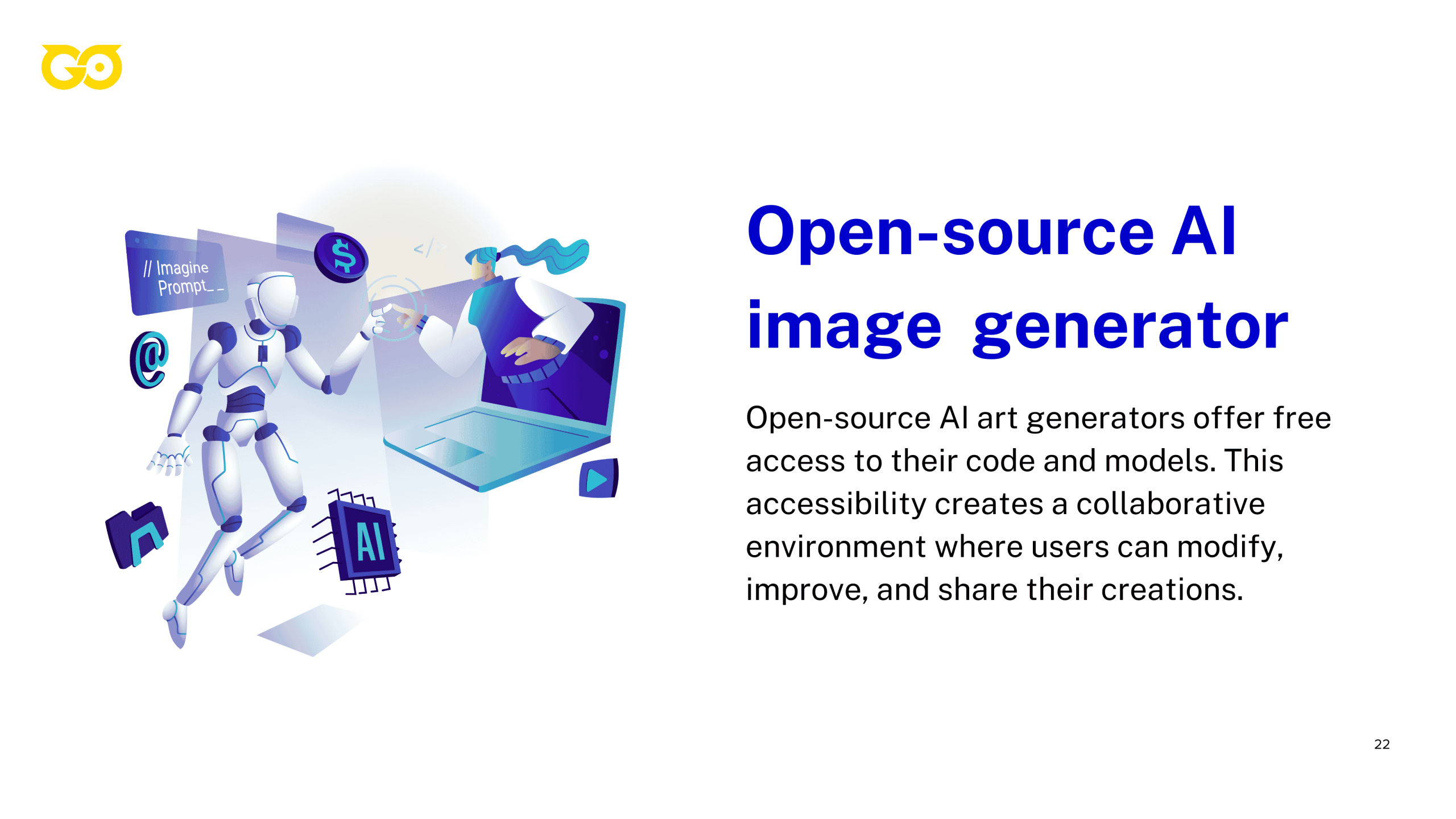
With uncensored AI image generators, many are built on the use of open-source models which give devs the ability to:
- Edit the architecture
- Retrain the components
- Modify the prompt cycles
- Remove the moderation layers
- Offering the models to be highly experimental
Community-Driven Development
During the development of this open community, they have:
- Developed custom checkpoints
- Provided fine-tuned models
- Optimized performance
- Increased stylization variety
This highly decentralized method is the opposite of closed, proprietary systems.
6. Prompt Processing and Tokenization
Interpreting How Prompts Work
When converted text images are used as prompts, they are interpreted via tokenization and transformed into numbers. The model utilizes these tokens for steering the image generation process.
Most uncensored AI image generators:
- Provide users with the freedom to select any word
- Do not have any specific terms blacklisted,
- Take a more literal approach to interpreting the prompts.
This results in increased user freedom in specifying the details, the style, and the amount of composition included.
7. Deployment Infrastructure
Local versus Cloud Deployment
Most uncensored AI image generators are used with only one of the following two types of deployments:
Local Deployment
- Operates on the user’s own hardware
- Provides complete privacy
- There is no moderation on the server side
- Some technical configuration is necessary on the user’s side.
Self-Hosted or Private Servers
- Access is more under control.
- There are more configurational options.
- No centralized supervision.
This is compared to the mainstream cloud servers which do have prompt and result logging.
8. Custom Controls and User Interface
Uncensored AI image generators are more likely to offer users control over advanced parameters like:
- Stipulated step counts
- Guiding scale
- Sampling Type
- Switching between models
- Seed values
- Guidance scale
- Stipulated step counts
- Switching between models
- Seed values
All of these contribute to the ability of the user to edit the generator’s outputs to a level that goes beyond the basic prompts.
Instead of using strict censorship, some systems utilize:
- Optional Content filters
- Limits that are adjustable by the users
- Controls based on age or access
This leads to the users no longer relying on the platform and instead, they take on more responsibility in terms of moderation.
9. Performance Optimization
Model Efficiency
Developers focusing on optimization of AI uncensored image generators streamlining tools by:
- Reducing inference time
- Improving memory usage
- Supporting GPU acceleration
- Lowering resource settings
This enables more users to utilize the tools.
10. Risks and Responsibility in Design
Addressing Misuse Potential
Even uncensored systems need safeguards against:
- Illegal content
- Non-consensual imagery
- Harmful misuse
- Developers need to put in:
- Legible usage policies
- Legal disclaimers
- Optional moderation plugins
Ethical Engineering Choices
Building uncensored AI image generators involves the following ethical decisions:
- Freedom vs. harm
- User autonomy
- Developer accountability
The best systems value transparency more than control.
11. Ongoing Development and Evolution
Continuous Model Improvement
Uncensored AI image generators are ever evolving with:
- The latest in training methodologies
- Cutting-edge diffusion algorithms
- Superb understanding of prompts
- Realism with diverse styles
Community Feedback
User feedback is essential in:
- Spotting strengths and weaknesses in models
- Usability
- Feature expansion
This process of iteration is the key to advancement.
Final Thought
In building uncensored image generators, the designs and architecture of the systems involve the same principles as building systems with censoring functionality. Generated models have diverged from each other not just in data curation, fine-tuning, or deployment philosophy, but in safety layering, user control, and more.
Less moderated and more open systems increase creative freedom, flexibility, realism, and build responsibility for both the users and the developers.
As the AI image generation continues to advance, the potential future is likely to be customizable moderation with creative freedom, ethical responsibility, and everything in between fully censored and fully unlimited systems.